


Between last Friday and this Friday I aged another whole week, folded, finished and shipped seven poetry booklets, avoided for six of the seven days any re-writing of chapter one from my AI novel, and confirmed what I suspected: that being 71-and-one-week feels functionally identical to being 71, except with slightly more evidence that Tempes not only fugits relentlessly but is not especially concerned with my publication schedule.
Context
Some detail to colour in the last three months.
The TINY FOLDED POEMS booklets1—37 of them produced now, hand-crafted with each one taking about thirty minutes of folding, trimming and stitching followed by three days in my equally hand-crafted book press before sanding, signing and boxing—have successfully made it out into the world. People from Japan to Los Angeles bought them. Nobody asked for refunds. People said wonderful things about them, including people I don’t know. And whilst unlikely to disturb anyone’s GDP, the proceeds have paid for a rather excellent corner desk at which to contemplate writing.
The novel about life after AI (working title “Making Way”) remains stubbornly unfinished, even after a whole day of fluid scribbling 2on Friday, possibly because writing about a future society that has transcended our current must-have-more ethos while simultaneously folding physical objects by hand creates a cognitive dissonance I haven’t quite resolved.
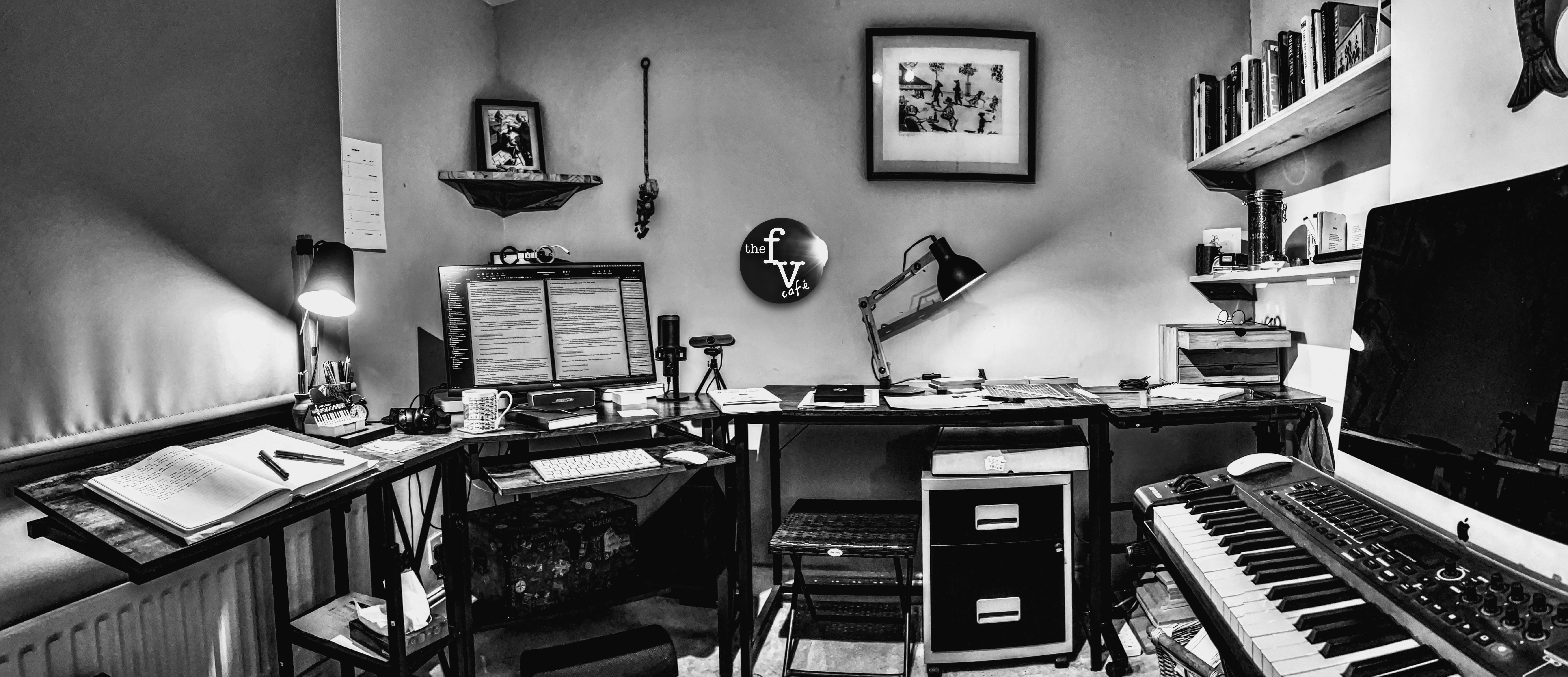
The fertile void café open sessions3 have welcomed new guests and explored new topics from the preparations for major snowstorms to finishing a memoir. Rants and inspiration in equal measure.
And somewhere between the booklets and the novel and the poems and the twice-weekly fv café sessions, I’ve been doing arithmetic. Not the hopeful kind where I finish writing three books before I turn 80, but the ruthlessly honest kind where you calculate pages-per-week against actuarial tables and the non-zero probability that either the leukaemia or the end of the internet or indeed, the end of the world as we know it gets there first.
Coming up:
• Why “is there enough time” is the wrong question when you’re making things that didn’t exist before
• The afternoon I realised I was performing triage on my own imagination
• What manufacturing experience, five marriages, and professional childcare taught me about starting things I might not finish
• One action you can take in the next ten minutes that assumes you’ll live long enough to regret it
This week’s “makes you think” discovery4
If all the water frozen in polar ice caps melts, as it is doing, sea level would rise by some sixty-five metres.
Sixty-five extra metres of sea level would leave 95% of the existing land above sea level.
Such a melt could take as much as 4,000 years
Where I live would disappear long before then
The Arithmetic Problem
On Friday afternoon—tea almost cold, Cohen playing softly on the ageing iMac, notebooks, booklet covers, bookmaking tools and manuscripts spread across my work table like evidence at a crime scene—I did the sums properly.
This wasn’t the version where I heroically finish everything. This is the version where I look at actuarial tables for 71-year-old men with my particular flavour of leukaemia (slow-acting, not immediately threatening, but still there in the background like a DIY chore or a shopping list), and I calculate pages per week versus weeks remaining, factoring in the possibility that Claude and/or his pals make the whole enterprise obsolete before I die anyway.
The numbers were... unhelpful.
Two unfinished books. Realistic writing pace of maybe 2,000 shaped words per week when I’m disciplined, which I’m not, because discipline is for people with more functional prefrontal cortexes than mine. Five daughters, all successful and happy, which means I clearly know how to start things even if the finishing part is less proven. Five marriages for similar reasons. Thirty-seven folded poetry booklets because sometimes you just need to make something you can actually complete inside one week.
I sat there with the spreadsheet open—yes, I actually made a spreadsheet, because my manufacturing management background dies hard—and realised I was essentially performing creative triage. Which projects get the remaining time? Which ones die on the table? Do I finish “Making Way” or do I fold more booklets or do I just sit here drinking tea and listening to Cohen until one of the countdowns reaches zero?
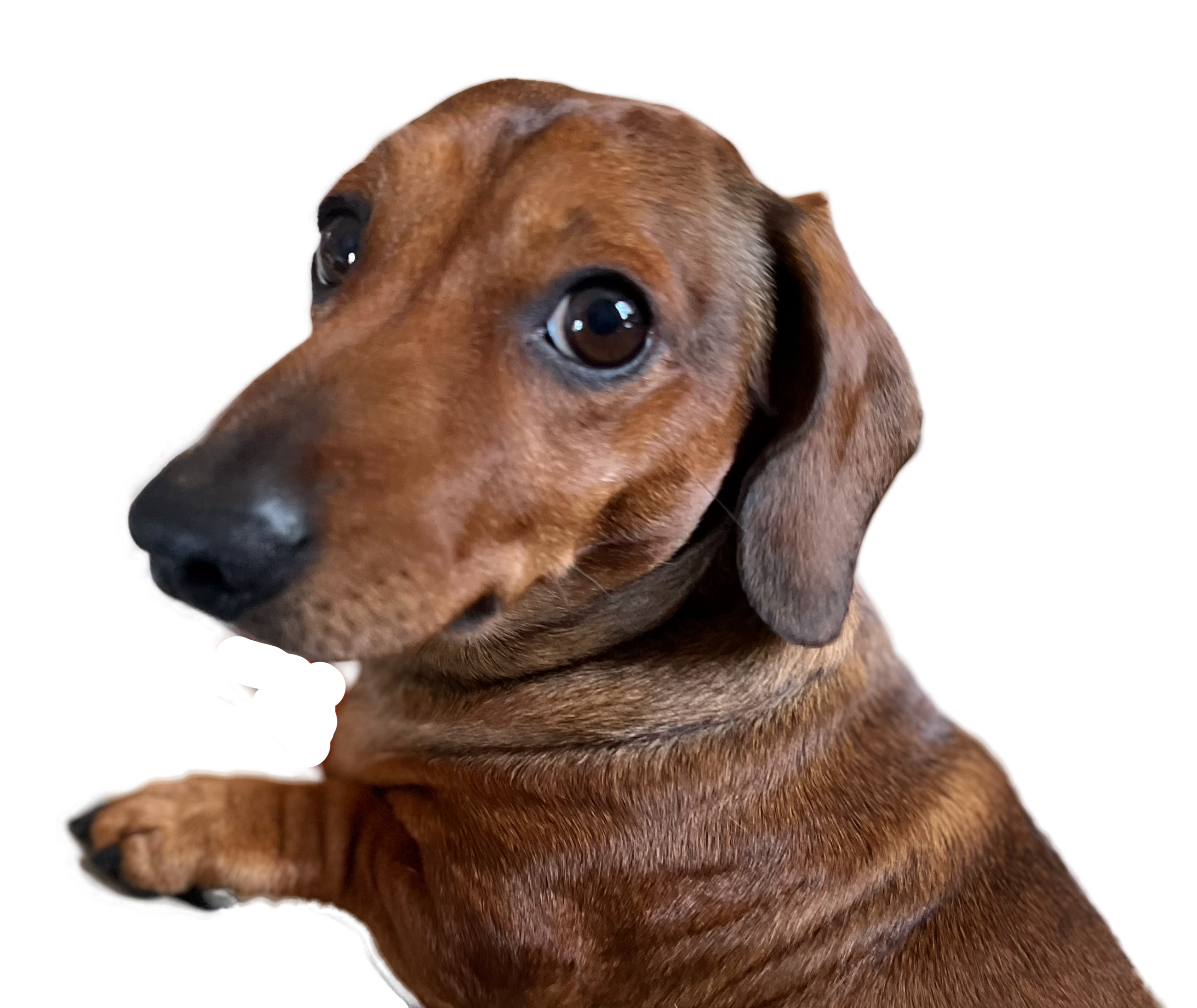
Then I laughed, out loud, alone in the room except for Ziggy5, who thought this must mean it was food time.
I laughed at what the arithmetic doesn’t capture: every single one of those 37 booklets is something that didn’t exist before I decided it should. Every sentence written of “Making Way” is a sentence about the future written by someone who might not see next Friday. Every poem is a small act of creative defiance against the statistical probability that I should be doing something more sensible and is moreover a quiet act of rebellion against a social paradigm of hoping things get better whilst watching them disintegrate.
The maths says I probably won’t finish everything, which is OK. Five marriages might be excessive and that didn’t stop me either.
About Time
(or the liberating arithmetic of probably not having enough of it)
A quarter of a century ago, I wrote this:
I ran out of time today
turns out
I didn’t have much
anyway
(There were another fifteen verses but mercifully my writing mentor crossed them out.)
What I’ve learned
Life changed for me when I stopped kidding myself I had an unlimited span before me.
1. The impatience problem becomes a clarity problem
I wrote a note last week about wanting to somehow ABSORB entire articles in one nanosecond while simultaneously wanting to savour the process of long-form reading, all the while also needing to actually write. That’s not impatience—that’s my brain doing triage in real-time. At 71 and counting, every choice about where to put my attention is a choice about what gets made versus what doesn’t.
I might call this creation anxiety or I can call it creative prioritisation. I’m choosing the second one because it’s less pathetic.
2. Hand-folding booklets while writing about post-apocalyptic AI is either absurd or the only sane response
“Making Way” is set far enough in the future that humanity and its collective consciousness has finally transcended its lust for more. Meanwhile, I’m folding 275-gsm paper at a work table with hands that once compiled strategic marketing plans and changed nappies and wore five different wedding rings and poured too much vodka and now ache when I’ve been writing for an hour and I’m tired.
The novel asks: what happens if we let AI help us be better humans, collectively?
The booklets answer: this is what happens when we are, already.
I used to think creativity was either a distracting hobby or the exclusive domain of unusually gifted people. Now I think it’s the essence of being human. Making things that were not there before. Choosing to add rather than subtract. Creating instead of consuming. Proving we were here. My attempt at a 70,000 year old hand stencil on a cave wall.
3. Remembering what Nan taught me about gifts without conditions
I wrote last year of Nan6, standing at the cooker, boiling mince with Angostura bitters for Smokey, the cat. “A gift isn’t truly a gift when given with conditions or expectations,” she said, her cigarette ash defying gravity.
My remaining time is a gift. It comes without conditions. It doesn’t care whether I “use it well” or finish my projects or become the person I thought I’d be by 71. It’s just there, like the bitters in the mince—inexplicable, slightly absurd, and entirely mine to do with as I please.
The leukaemia, the actuarial tables, the AI apocalypse—none of that changes the fundamental arithmetic of being alive right now. Which equates to: today existed. I can make something with it or not. Either way, tomorrow shows up for me with the same unconditional offer.
4. Five marriages and five daughters taught me more about narrative structure than finishing things
Every marriage was a complete story with a beginning, middle, and end. Not all of them ended well. In none was I the hero. All of them mattered.
Every daughter is an ongoing narrative I don’t control. They’re all happy and successful, which means the “unfinished” part is working out fine without my outlining a plot to be a good father to them, at which I failed big style.
The early manufacturing career, the midlife marketing years, the professional childcare years—all complete chapters that weren’t in any original plan.
So when I sit here worrying whether I’ll “finish” the AI novel, I’m asking the wrong question. The question isn’t whether I finish. The question is whether what I made today was worth making.
Thirty-seven booklets say yes.
One thing you—yes, you—can do right now
Indulge me as I speak directly to you, gentle reader - you know, in that way all the best blog-writers and life-instructors recommend. I’m really talking to myself here; good advice is hardest to take when it’s a) your own and b) aimed at you.
Open whatever you’re avoiding. The novel, the book proposal, the essay, the poem that scares you, the notebook you bought the Christmas before last, the project you started three years ago and haven’t touched since.
Write one sentence that assumes you’ll live long enough to regret it.
Not the safe sentence, not the clever, crafted one. The true one that is waiting just behind the curtain of acceptability. The one that makes you think “am I allowed to say that?”
You have less time to waste on permission than you think. So do I. So does everyone reading this, actually, but most of us are still pretending otherwise.
Then make some tea and drink it while it’s hot and Cohen is still playing. Come back tomorrow. Do it again.
The maths doesn’t care whether you finish. But the work cares whether you showed up.
(This is what I’m going to do as soon as I’ve pressed “Publish” on this.)
A question for you that I’m asking myself, also right now
What are you making that you’ll probably never finish?
And does that fact make you work harder or does it make it matter less?
I’m genuinely curious whether I’m the only one doing triage on my own imagination, or whether this is just what 71-and-a-week looks like. Perhaps everyone at every age is secretly calculating the same impossible arithmetic and pretending they’re not.
Tell me in the comments—I’ll read and reply to every one.
And finally - have a happy, creative Sunday. Please.

1 If you’re curious about the TINY FOLDED POEMS booklets, the Twenty-four edition is available here. They’re hand-folded, one at a time, £25 with free UK shipping. I make them because apparently I need to finish something, even if it’s just a thirty-minute folding project.
2 Aided significantly by Beth Kempton’s “How to be a Fearless Writer” podcast
3 Next week’s café session is on Wednesday at 2:00pm (London). We’ll be talking about something—you decide. Bring tea. Bring yourself. Bring whatever unfinished thing is haunting you—you’ll be in good company.
4 courtesy of The Drowned Earth: 4000 AD, After The Thaw, Frans Blok; published May 2019 and updated 6th . January 2026
https://www.3develop.nl/blog/sea-level-rise-map-drowned-earth/
5 For clarity, Ziggy is the most perfect miniature red dachshund in the world
6 Full Time and Tide story
Ooh it feels like a subtle change has occurred. A shift in style and outlook … I’m taking it all in.
🙏🏻
Love this Matthew, though I'll leave the metrics and spreadsheets to you ;) Slipping away and continue working on the meditation I promised to create. Edging closer to existence...